
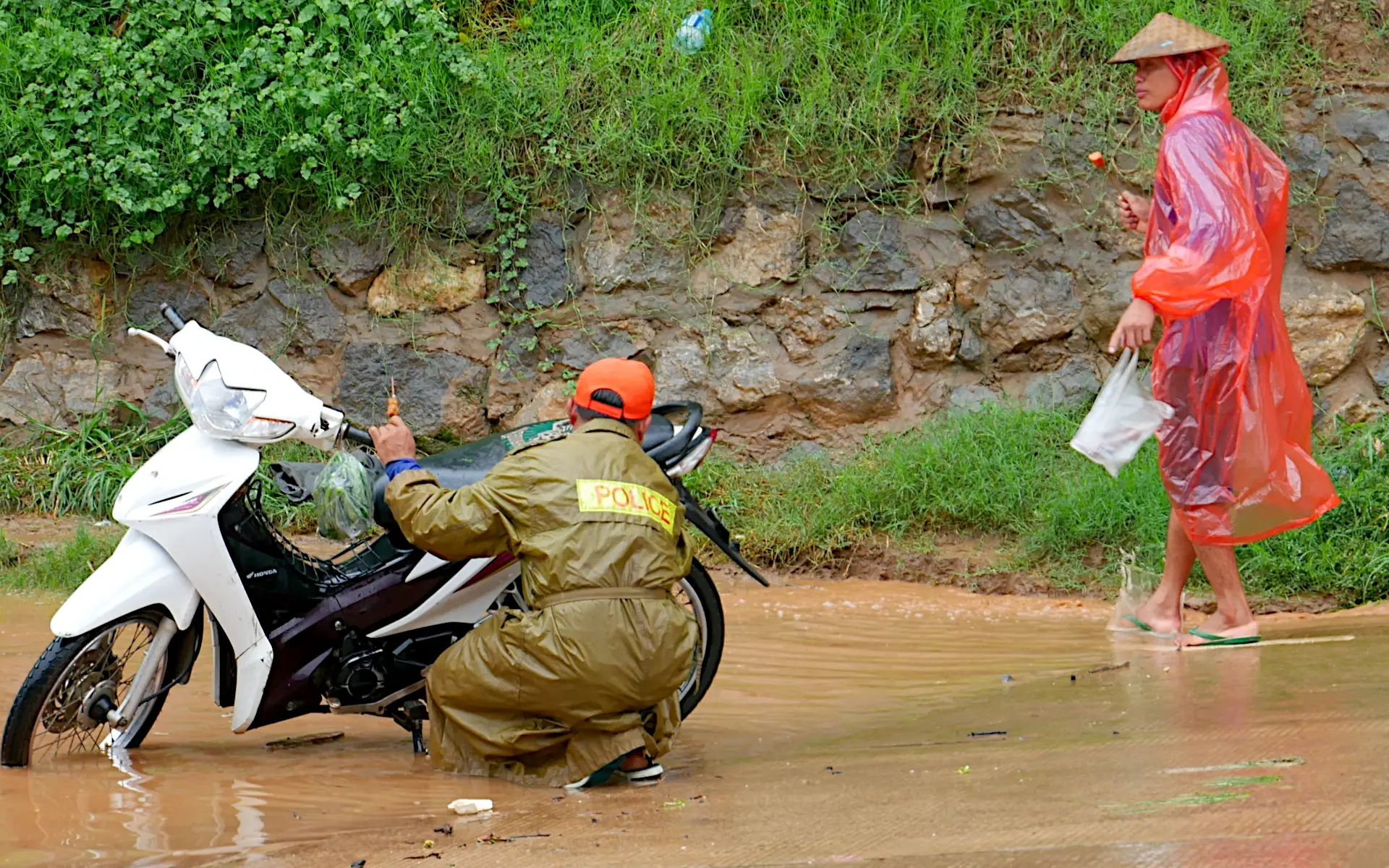
Laos is generally a remarkably safe destination for travelers. For the devout Buddhists of Laos, committing a crime—even petty theft—accumulates bad karma, which negatively impacts their chances of a better rebirth. Even so, visitors shouldn’t throw all caution to the wind, especially in very touristy destinations.
Solo Female Travelers
Laos is widely considered a very safe destination for solo female travelers. Lao culture is deeply rooted in Buddhist values, making mutual respect and restraint in public interactions the norm, and unpleasant encounters such as harassment are extremely rare.
Still, as anywhere in the world, trust your instincts: avoid deserted alleys and poorly lit areas at night, and make sure you know and clearly state your accommodation or a familiar landmark during longer taxi or tuk-tuk rides. If you are traveling through rural regions, keep in mind that traditional values and gender roles are much more pronounced outside the cities.
Preventing Petty Theft
Standard travel precautions apply in Laos just as they do elsewhere:
- Watch your bags on the street: Keep handbags and daypacks worn securely across your body—or on the side away from traffic—on busy streets so they cannot be snatched by passing motorbike thieves.
- Stay alert in crowds: Keep a close eye on your belongings in crowded public areas such as bus stations and local markets.
- Secure valuables and luggage: Leave expensive watches and fine jewelry at home or locked in your hotel safe. Secure large suitcases with a padlock, and always keep your bags in sight when boarding or disembarking buses and boats.
Traffic and Transportation Safety
Private car and motorbike ownership has surged in recent years, often without rigorous driver testing or licensing. The result is a high rate of traffic accidents, particularly in larger cities. Conditions in the countryside are no easier, where poor road infrastructure meets poorly maintained vehicles. If you plan to explore independently by rental car or motorbike, make safety your top priority: drive defensively and avoid traveling after dark.
- Scooter rentals: If you rent a scooter to ride out to a nearby waterfall, take a quick test spin first to check the brakes and tires. Even though it isn’t always common practice locally, always wear a helmet. On another note: it is common practice to for the renter to keep you passport as deposit for the scooter.
- Mekong speedboats: Exercise caution with the scheduled speedboats operating on the Mekong River. Fatal accidents occur regularly on these high-speed “rocket boats.” If you choose to take one, wear both a helmet and a life jacket—or better yet, opt for the scenic slow boat instead.
- Domestic flights: While national carrier Lao Airlines operated older Russian-built aircraft years ago, it has since modernized its fleet with contemporary Airbus and Embraer jets, offering safe and reliable connections within Laos and to neighboring countries.
Legacies of the Vietnam War: Unexploded Ordnance
During the Vietnam War, more bombs were dropped on Laos than during the entirety of World War II. Millions of these munitions failed to detonate and remain buried in the soil today as unexploded ordnance (UXO), alongside countless uncleared landmines.
Especially near the Vietnamese border—as well as in popular areas like the Bolaven Plateau and the Plain of Jars—independent travelers and backpackers must strictly obey warning signs and never stray from clearly marked paths. Whenever hiking or exploring off the beaten path, hiring a knowledgeable local guide is by far the safest option.
Alcohol, Vapes, and Drugs in Laos
Alcohol and Methanol Risks
Alcohol is widely available and easy to find throughout Laos. Alongside the ever-popular national lager, Beerlao, locals frequently drink a potent homemade rice spirit known as Lao-Lao—definitely not for the faint of heart. A milder traditional specialty is Lao Hai, a fermented rice beverage comparable to Japanese sake. The Hai is a clay jar in which rice is fermented with yeast, sugar, and water; once ready, fresh water is poured into the jar, and everyone drinks communally through long bamboo straws.
However, caution is essential when drinking Lao-Lao, particularly in rural areas. Improperly distilled homemade spirits repeatedly lead to severe—and sometimes fatal—methanol poisoning. Only consume alcohol from reputable, clearly traceable sources, and avoid complimentary “welcome shots” offered at budget hostels or basic guesthouses.
E-Cigarettes and Vapes
Just like in several neighboring Southeast Asian nations, e-cigarettes and vapes are illegal in Laos. While local police enforce the ban sporadically, getting caught can result in steep fines.
Illegal Drugs and Opium
Official penalties for possessing or consuming illegal drugs in Laos are severe, mirroring the strict laws across Southeast Asia. Faced with rising domestic substance abuse and drug-related crime, authorities have stepped up enforcement in recent years.
Historically, Laos was one of the world’s largest producers of opium. Among older generations who have spent a lifetime doing grueling agricultural labor, opium is still used as a traditional painkiller and is largely tolerated by local communities. That tolerance does not extend to younger generations—and certainly not to tourists.