
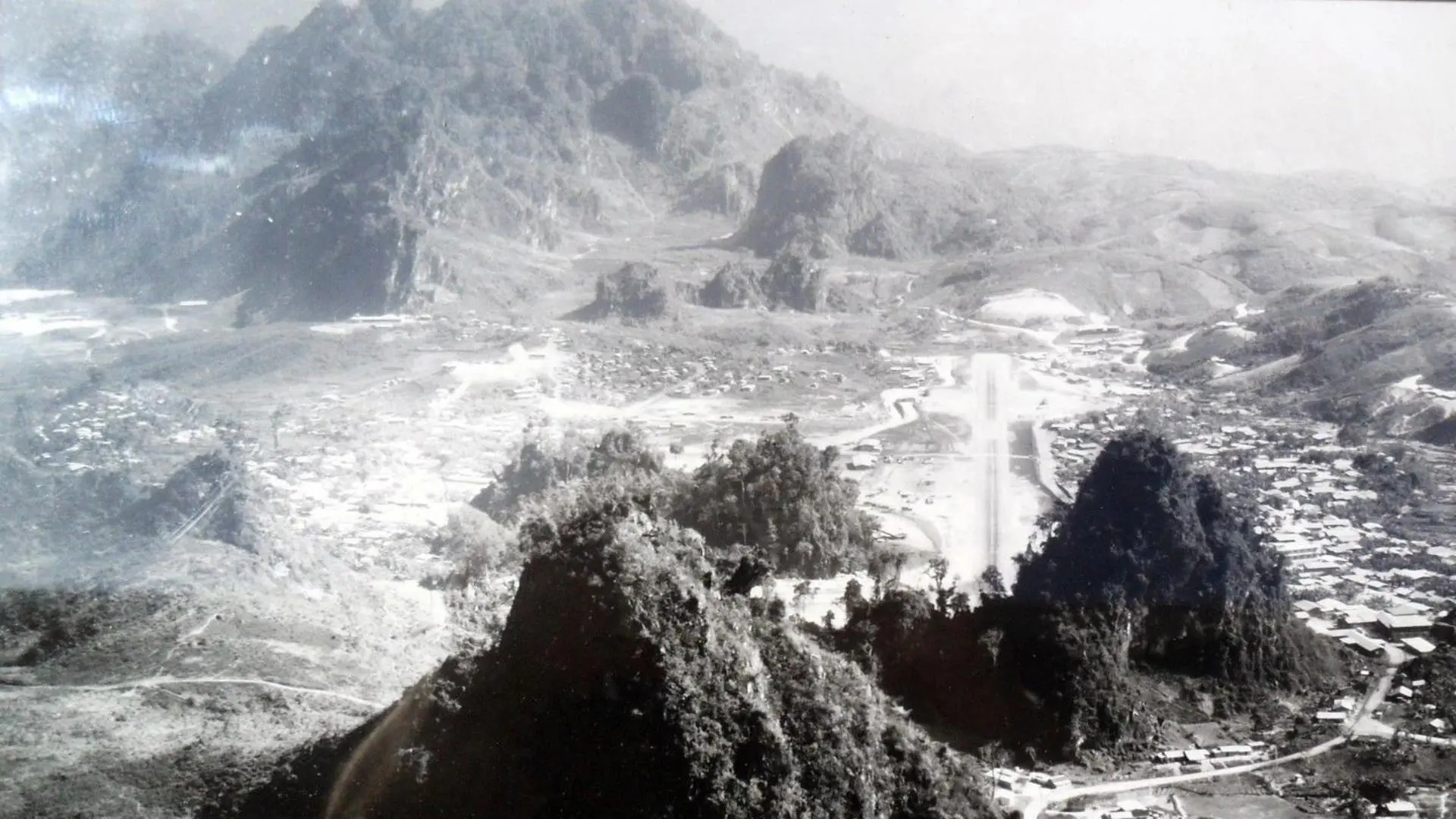
The history of Laos is marked by powerful kingdoms, colonial subjugation, and the dramatic consequences of the 20th century. Yet, despite its often difficult past, the country maintains a remarkable cultural and spiritual continuity to this day. Many places in Laos still bear visible witness to its most important historical periods.
The Beginnings – The Kingdom of Lan Xang
The origins of modern-day Laos lie in the Kingdom of Lan Xang (“Land of a Million Elephants”), which was founded in 1353 under King Fa Ngum. The kingdom encompassed large parts of present-day Laos, northeastern Thailand, and adjacent areas in Vietnam and Cambodia. Under King Setthathirath, who moved the capital to Vientiane in the 16th century, Lan Xang experienced its golden age – both culturally and spiritually. Important shrines such as Pha That Luang in Vientiane and Wat Xieng Thong in Luang Prabang date from this period.
In the 18th century, the kingdom fragmented into smaller kingdoms – Luang Prabang, Vientiane, and Champasak – which maintained only loose ties and increasingly fell under Siamese influence.
Colonial Era and French Indochina
From 1893, Laos became part of the French colony of Indochina. The French promoted infrastructure projects, introduced compulsory education, and primarily used the country as a buffer zone between Siam (Thailand) and Vietnam. French colonial buildings can still be seen today in the colonial-era old town of Luang Prabang, as well as in the historical centers of Savannakhet and Pakse.
At the same time, Vientiane was developed into the administrative center of the Laotian part of Indochina. French remained the official language in administration and education until the 1970s.
The Road to Independence
After World War II, the Laotian independence movement gained momentum. Independence from France was formally recognized in 1953. However, the young Kingdom of Laos was quickly drawn into the East-West conflict of the Cold War. Communist forces (Pathet Lao), monarchist groups, and foreign interests vied for control of the country—a politically fragile balance that ultimately led to a new war.
The Secret War
In the 1960s and 70s, Laos was the scene of a largely unknown but devastating chapter of the Vietnam War—often referred to as the “Secret War.” The US conducted massive bombing raids against communist forces and supply routes of the Ho Chi Minh Trail, which ran through southern Laos. Between 1964 and 1973, the US Air Force dropped more bombs on Laos than in the entirety of World War II—over two million tons.
The consequences of this war are still felt today:
- Large parts of the country, especially the provinces of Xieng Khouang, Savannakhet, and Sekong, are contaminated with unexploded ordnance (UXO).
- Thousands of people have been injured or killed by these unexploded bombs since the end of the war.
- In Phonsavan, near the famous Plain of Jars, MAG operates a visitor center and provides information about UXO clearance and disposal.
- The UXO Laos Visitor Center in Luang Prabang is also an important resource for travelers interested in history.
- In Vientiane, the COPE Visitor Center provides information about the dangers of UXO and the work of victim support organizations.
For decades, the “Secret War” received little international attention. Only since the turn of the millennium has the issue gained greater public awareness, not least due to international aid projects and local efforts to address the past.
The Lao People’s Republic
In 1975, the communist Pathet Lao movement seized power and proclaimed the Lao People’s Democratic Republic. The monarchy was abolished, the last king deposed and imprisoned. Since then, the Lao People’s Revolutionary Party (LPRP) has been the sole political force in the country.
Despite the authoritarian system, Laos has opened up in recent decades. Since the 1990s, the country has increasingly focused on economic liberalization and international cooperation. Tourism is being actively promoted as a development sector – with a focus on culture, nature, and sustainable travel.
Historically Significant Sites in Laos
Travelers can explore many places in Laos to trace the country’s history:
- Luang Prabang: Former royal capital with well-preserved temple architecture and colonial heritage (UNESCO World Heritage Site)
- Vientiane: Political center with the national shrine Pha That Luang, the colonial Presidential Palace, and the Patuxai (triumphal arch)
- Plain of Jars: Megalithic puzzle with over 2,000 stone jars – a World Heritage Site and a place scarred by war
- Phonsavan: Center for UXO remediation with visitor opportunities at the Mines Advisory Group (MAG) Center
- Vieng Xai: Complex of 480 caves used by the Pathet Lao during the Second Indochina War. Up to 23,000 people lived in the caves.
- Champasak: A southern Laotian city with the pre-Angkorian temple Wat Phou, also a UNESCO World Heritage Site.
- Savannakhet: A historic old town center with French colonial buildings and Buddhist temples.