
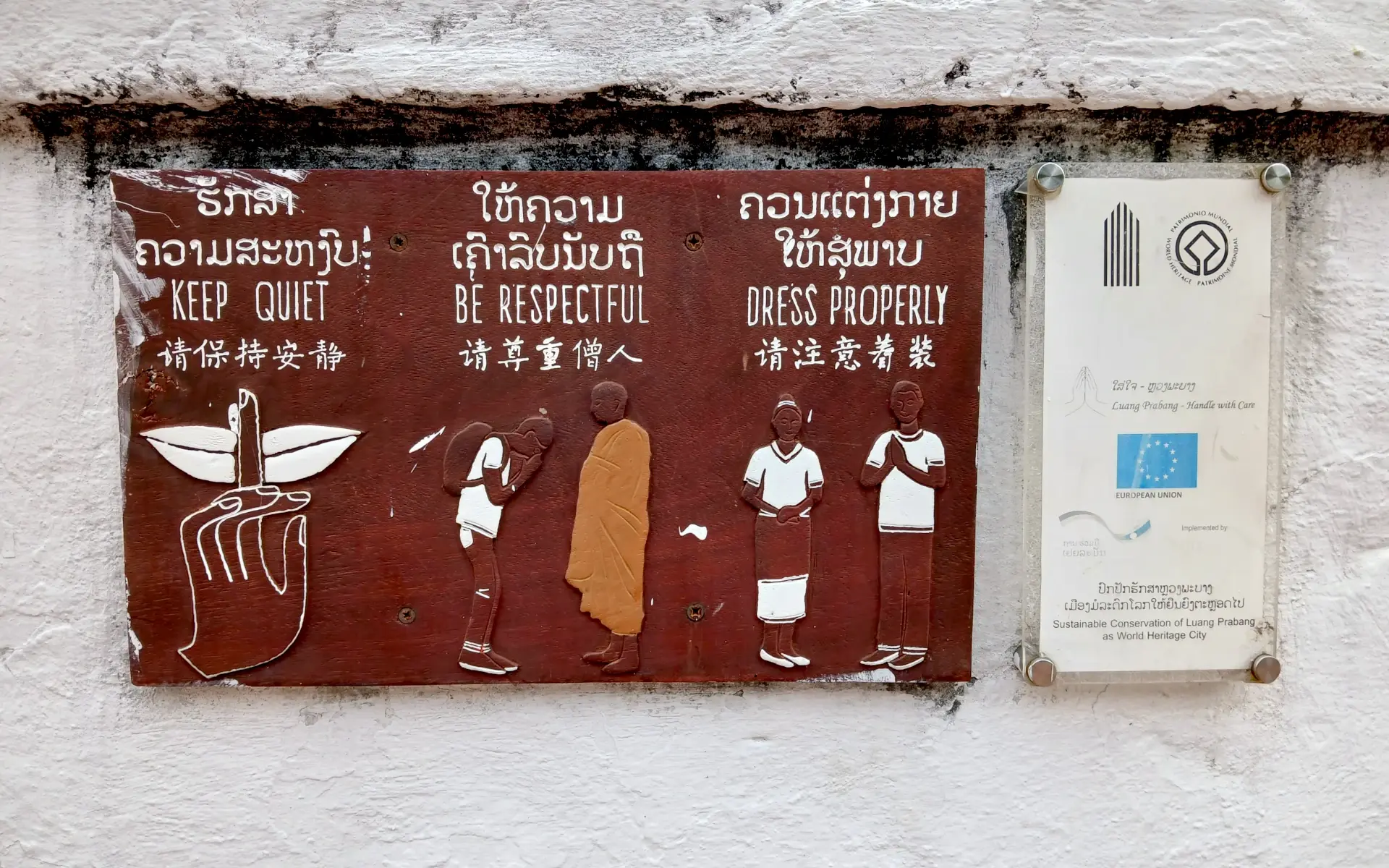
The most important Dos and Don’ts in Laos
✅ Do’s
- Be polite and calm.
- Cover your shoulders and knees – especially in temples.
- Remove your shoes before entering houses and temples.
- Ask for permission before taking photographs.
- Treat monks respectfully and keep your distance.
- Buy local products and crafts directly in the village or from artisans.
- Make sure souvenirs are handcrafted in Laos and not mass-imported from abroad.
- Help children through established aid projects rather than giving them sweets or money.
🚫 Don’s
- Do not display public affection.
- Do not be loud or confrontational.
- Do not point at Buddha statues or people – especially not with your foot.
- Do not take close-up photos while bathing or during religious ceremonies.
- Do not give money or sweets to begging children.
- Do not walk through the village topless or in swimwear.
- Do not eat, smoke, or use a mobile phone in temples or holy sites.
Guidelines for Traveling in Laos
Laos is a traditional and deeply Buddhist country whose people are known for their calm, friendly, and reserved nature. Guests who behave respectfully will be received with genuine warmth. To ensure your trip is not only pleasant but also culturally enriching, we recommend following these guidelines.
Remain calm and treat others with respect. Laotians appreciate politeness, restraint, and a friendly demeanor. Loud arguments, confrontations, or public displays of emotion—even excessive joy—can quickly be off-putting. Instead, a smile often goes a long way. Public displays of affection should also be avoided, especially in temple complexes.
Appropriate Clothing
Shorts, revealing tops, or bare chests are inappropriate in everyday life and in temples. Shoulders and knees should always be covered – especially when visiting religious sites. Dressing respectfully allows you to interact with the people of Laos as equals – this is noticed and appreciated.
Etiquette in Temples and Monasteries
When visiting a temple: Remove your shoes, lower your voice, and refrain from taking selfies in front of Buddha statues. Women should not touch monks or directly hand them anything. Men should also avoid physical contact with monks. Be careful not to point the soles of your feet at people or Buddha images – this is considered very impolite.
If you encounter a monk or novice who speaks to you or allows you to take a photograph: Politely ask for permission beforehand – and show the picture afterward. Communication on equal terms is always welcome.
Tak Baat – Alms Giving in the Morning
The morning alms round (Tak Baat) is a sacred moment for many Laotians. Tourists should keep their distance, observe respectfully, and under no circumstances interfere with the process – certainly not to get a good photo. Anyone wishing to give alms should familiarize themselves with the proper etiquette beforehand.
ChildSafe – Protecting Children
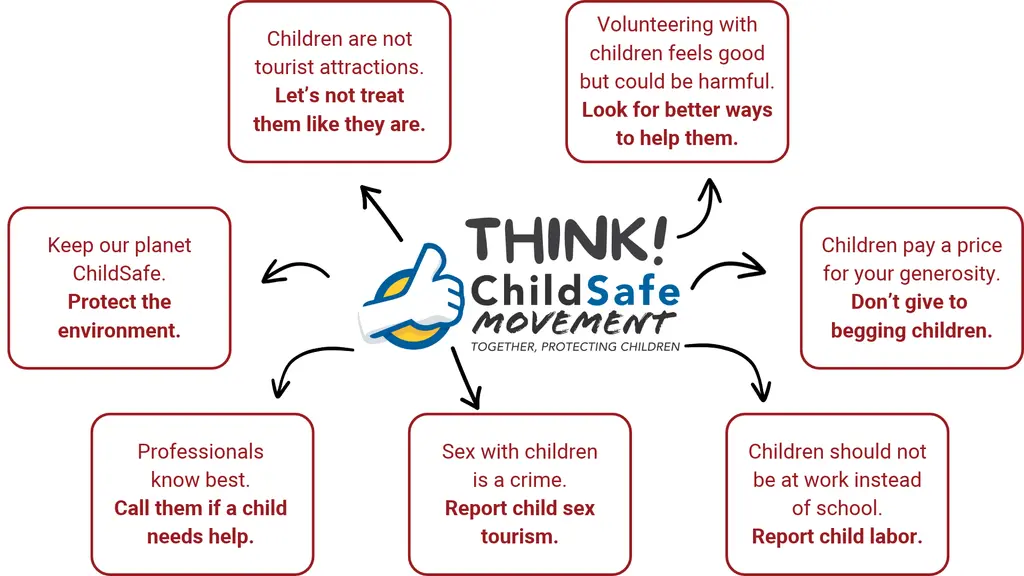
The ChildSafe Movement has compiled seven simple measures under the title Think! to protect the most vulnerable members of society from the negative consequences of tourism:
Make a Meaningful Donation
Even if it’s difficult: Distributing money or sweets to children encourages begging in the long run and can jeopardize their education. Those who want to help are better off donating to a local organization or bringing useful donations (e.g., school supplies) directly to the village through a recognized initiative.
Sensitive Photography
Laotians are generally happy to be photographed—provided you ask first. A “Khop chai” (thank you) and showing them the picture are customary—especially if, due to the language barrier, you can only ask for permission using gestures. Please avoid taking pictures of people while bathing or during private moments. During religious ceremonies, discretion is advised—sometimes the most beautiful snapshot is the one you cherish in your heart.
Portrait photos of children are only acceptable with the explicit consent of their parents.
Support Local Crafts
Buy souvenirs directly from artisans and small family businesses – especially in rural areas. Laotians calculate prices fairly – usually based on the cost of materials, not labor. A friendly chat is worth more than hard bargaining.
Buying locally not only helps individuals, but often entire village communities.