

Hearty, Regional, and Steeped in Culture
In Laos, eating is more than just sustenance – it’s a way of connecting with others. Even the typical greeting, “Gin khao bor?” (“Have you eaten yet?”), reveals the importance of meals in daily life. Travelers are often spontaneously invited to join a meal – for example, with the phrase “Gin khao namkan” (“Eat something with us”), even if this gesture of hospitality sometimes goes unnoticed.
Lao Cuisine Compared
At first glance, Lao cuisine resembles Thai or Vietnamese cuisine. Indeed, there are many shared ingredients – such as rice, fish sauce, chilies, and fresh herbs. However, a closer look reveals a distinct character:
Laos vs. Thailand
Thai cuisine is sweeter and oilier, often featuring coconut milk, sugar, and sophisticated curry pastes. In Laos, on the other hand, the food is simpler, drier, and more herb-forward – without much oil and usually without coconut milk. “Padaek,” a fermented fish sauce, is also used instead of the clear Thai nam pla.
Laos vs. Vietnam
While Vietnamese dishes are often characterized by mild flavors, fresh salads, and clear broths, Lao food is bolder, saltier, and often spicier. Furthermore, sticky rice is the number one staple food in Laos – in contrast to Vietnam’s preference for fragrant rice and rice noodles.
Typical Ingredients and Food Culture
Sticky rice (“Khao Niaw”) is the centerpiece of every meal—served in bamboo baskets and eaten by hand. It is usually accompanied by many small dishes for sharing: herbs, grilled meats, fermented fish, pickled vegetables, broths, and dips.
Fresh herbs such as mint, lemon balm, coriander, and dill are ubiquitous. Fish from the Mekong River, water buffalo meat, bamboo shoots, and exotic fruits also play a significant role.
10 Laotian Dishes You Should Try
- Sticky Rice (Khao Niaw)
Steamed rice for kneading and dipping – the quintessential Laotian staple. - Laap (Larb)
The Laotian national salad made with finely chopped meat or fish, lime juice, mint, chili, and roasted rice – served raw or cooked. It is usually eaten with sticky rice. Vegetarians can occasionally find tofu laap. - Tam Mak Hoong (Green Papaya Salad)
Fresh, spicy, and intensely fermented – with padaek (a type of fermented peanut), lime juice, and chili. - Mok Pa
Steamed fish wrapped in banana leaves with herbs, lemongrass, and galangal. - Khao Jii Paté (Laotian Baguette)
French-influenced: baguette with pâté, vegetables, chili sauce, and sometimes Laotian sausage. - Khao Piak Sen
Rice noodle soup with chicken – a hearty meal often eaten for breakfast. - Naem Khao Tod
Crispy rice salad with chicken, egg, leek, ginger, lime juice, peanuts, and fresh herbs. - Sai Gok
Laotian sausage made with pork, herbs, and sticky rice—often lightly fermented. - Phor (Pho)
Noodle soup, more intensely spiced than in Vietnam and often served with chili, garlic, and fresh herbs. - Beerlao (Bia Lao)
The country’s most popular drink—an aromatic lager made with local rice, hops, and French malt.


Lao Drinks
- Beerlao is the national drink – mild, easy to drink, and available everywhere.
- Lao Lao is a strong rice liquor – popular at festivals, but not for beginners.
- Lao Hai is drunk from clay pots with straws – usually at traditional ceremonies.
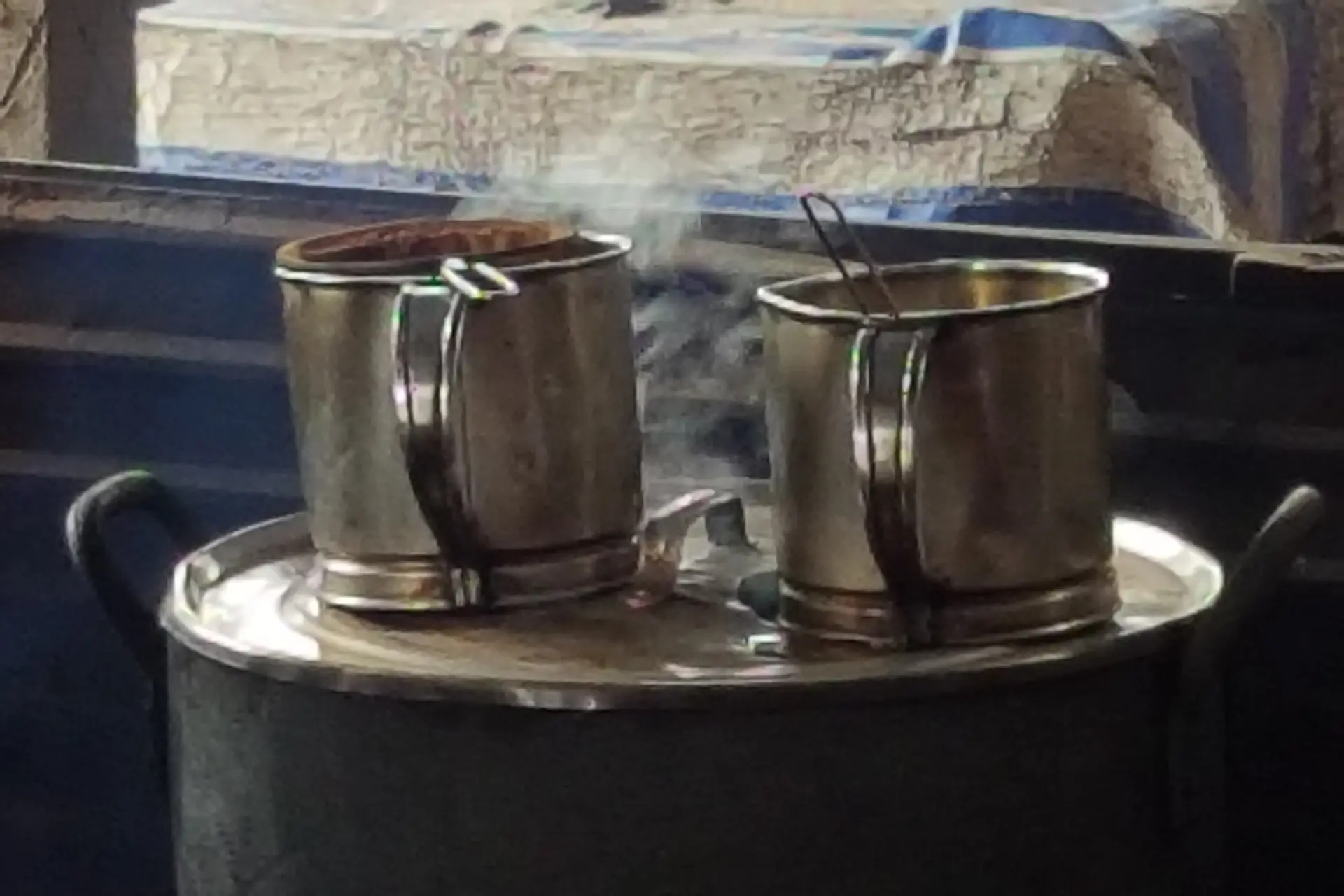
- Coffee (Gaa Fee) from the Bolaven Plateau (Café Pakxong) is among the best in Southeast Asia – often served with sweetened condensed milk.
- Fresh juices made from sugar cane, coconut, or seasonal fruit are a delicious refreshment.
Ice cubes are served with most drinks. These ice cubes are usually produced directly in the drinking water plants and are therefore perfectly safe to consume.
Eating Vegan and Vegetarian in Laos
Although traditional Laotian cuisine is heavily based on meat and fish, vegetarians and vegans will find a pleasing variety – especially at markets or in family-run restaurants, where food is often freshly prepared.
Typical meat-free dishes include:
- Tam Mak Hoong (green papaya salad) – often with fish sauce, but easily made vegan
- Jeow – spicy dips made with chili, eggplant, or tomato, perfect with sticky rice
- Steamed vegetables with soy sauce or garlic
- Tofu dishes – especially in soups or stir-fried with vegetables
- Sweets made with coconut milk and rice, often vegan
In more touristy areas like Luang Prabang or Vientiane, there are many cafes and restaurants with vegetarian or vegan options – some even with Western influences.
Useful phrases for vegetarians and vegans
The terms “vegetarian” or “vegan” are not widely used in Laos, as the food culture traditionally lacks clear categories. Fish sauce, in particular, is not necessarily considered an animal product. Nevertheless, you can make yourself understood using the following phrases:
| English | Lao (phonetic) |
|---|---|
| I don’t eat meat. | Khoi bor gkin sin. |
| I don’t eat fish. | Khoi bor gkin paa. |
| I’m vegetarian. | Khoi pen Khon gkin phak. |
| Without fish sauce please. | Bor sai nam paa / Bor sai padaek. |
| I don’t eat eggs | Khoi bor gin khai. |
| Without MSG/flavor enhancers please. | Bor sai peng nua. |