
Laos remains one of Southeast Asia’s last cultural secrets. Mass tourism has barely touched the country, and travelers interested in authentic cultures will find an impressive diversity of traditions, customs, and ways of life. As the only landlocked country in the region, Laos is geographically surrounded by its neighbors – and their cultural influences are reflected in the country’s various regions.
Ethnic Diversity
A prominent feature of Laos is its ethnic diversity. According to official figures, there are 49 recognized ethnic groups, but experts believe the actual number is far higher. This ethnic diversity is particularly evident in the north of the country, where cultural differences are especially pronounced.
The three main groups are:
- Lao Loum (Lowland Laotians)
Approximately 60% of the population belongs to the Lao Loum group, who live in the fertile lowlands along the Mekong River. They belong to the Tai-speaking ethnic group and significantly shape the official Laotian language and culture. - Lao Theung (Middle or Hill Country Peoples)
These Mon-Khmer-speaking groups, which include the Khmu and Katang, comprise around 20% of the population. They are the most traditional inhabitants of the country and live primarily in the hill regions. - Lao Soung (Highland Peoples)
These groups—primarily Hmong and Yao—originally come from southern China and now live in the mountainous regions of the north. Many Hmong people live abroad today, having fought against the communist government during the Second Indochina War.
Despite significant cultural differences, the ethnic groups now live together largely peacefully. The government is increasingly striving for reconciliation, equality, and access to education for all ethnic groups.
Language and Colonial Heritage
Lao is the official language and is taught in schools nationwide. However, in rural areas, many people primarily speak their respective ethnic languages. French remains present in education and politics, especially among the older generation and the urban upper class. More recently, English has gained increasing importance as a modern lingua franca – particularly in tourism.
Religion in Laos
The religious landscape in Laos is deeply influenced by Theravada Buddhism, which has been present since the 8th century. Traditionally, the temple in every village was the spiritual and social center. Even today, many young men spend time as novices in a monastery – often as part of an initiation rite into adulthood.
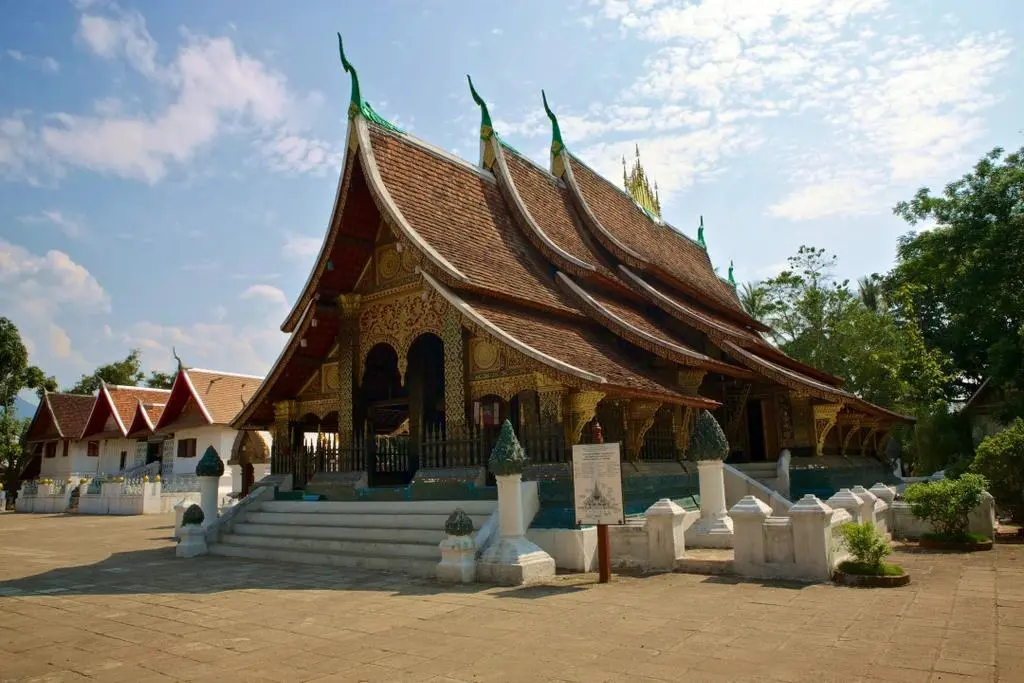
Wat Xieng Thong – The Juwel of Luang Prabang
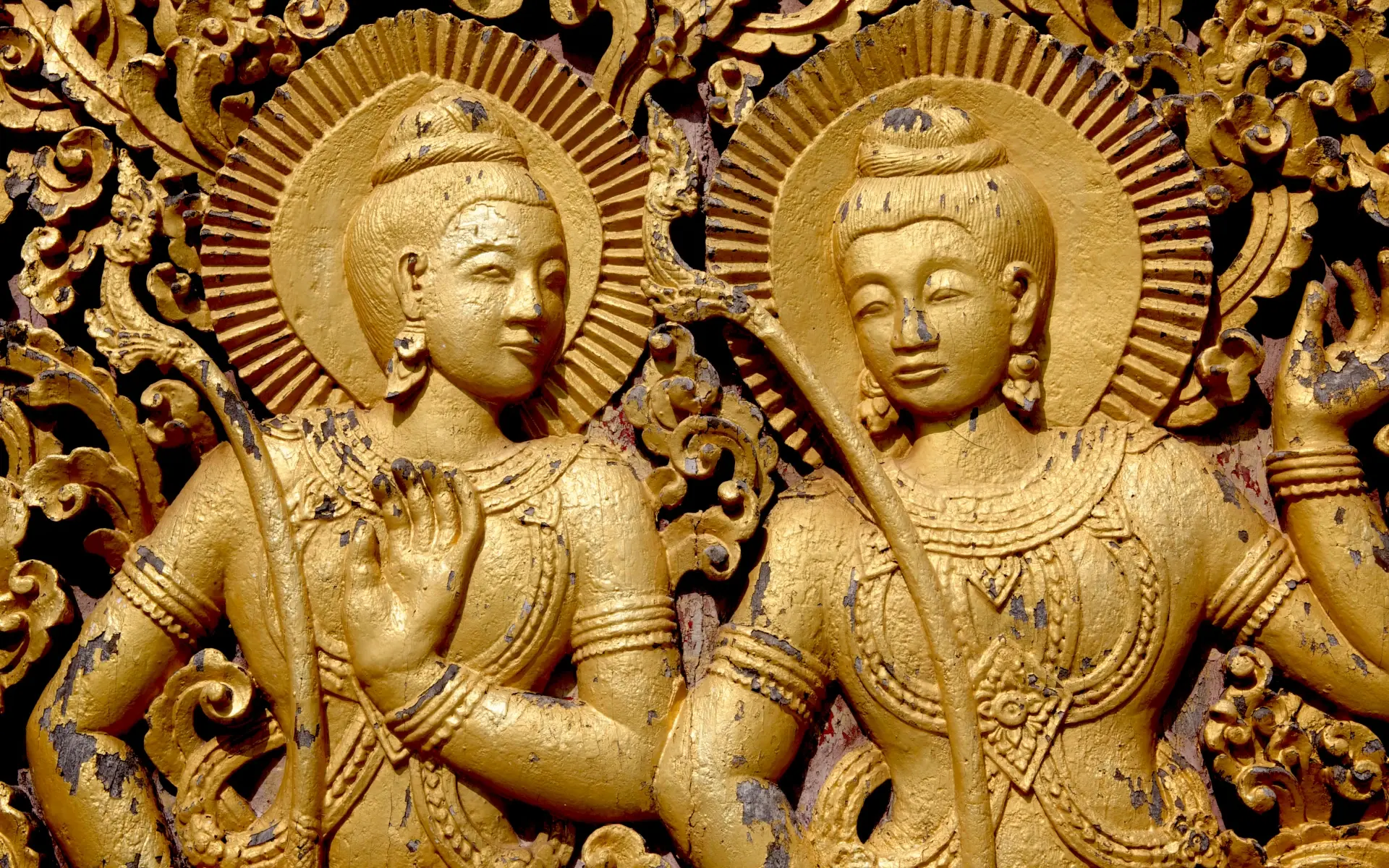
Wat Xieng Thong is one of the most famous and ornate temples in Laos and a prime example of classical Laotian architecture. Built in 1560 during the reign of King Setthathirath, it long served as a royal ceremonial temple. Particularly striking is the richly decorated roof, which slopes gracefully almost to the ground in traditional Laotian style. The main building’s walls are adorned with intricate gold mosaics depicting scenes from the life of Buddha. Picturesquely set at the confluence of the Mekong and Nam Khan rivers, Wat Xieng Thong remains a spiritual and cultural center of Luang Prabang.

Pha That Luang – National Shrine and Symbol of Unity
Pha That Luang (“Great Stupa”) in Vientiane is the most important religious monument in Laos and a proud national symbol. Believed to have been founded in the 3rd century BC, the golden stupa was rebuilt in its current form in the 16th century by King Setthathirath. Rising 45 meters high, the central spire is encircled by an outer wall containing 30 smaller stupas. Every November, the grand That Luang Festival takes place here, attracting devout pilgrims from across the country. Beyond its deep religious significance, Pha That Luang embodies national identity and adorns the Laotian coat of arms.
Animistic traditions and ancestor worship are also widespread in the mountainous regions. These are often blended with Buddhist practices. Smaller religious groups such as Christians, Muslims, and followers of Vietnamese-Chinese faiths also exist – mostly in the cities.
Lao Culture in Daily life
Respect, humility, and a strong sense of community characterize social life. Family is central, and elders are held in high esteem. Guests are always warmly welcomed—an invitation to a meal or tea is almost a given.
The Buddhist calendar governs many aspects of life: Numerous festivals, such as Pi Mai (Lao New Year) and the Festival of Lights (Boun That Luang), are based on the lunar phases. During these festivals, Lao culture comes alive in a particularly vibrant way—with traditional dances, music, offerings, and religious ceremonies.
Cultural Expressions
Laotian art is strongly influenced by religious symbols: temple walls are adorned with murals, and stupas are covered in gold leaf. Wood carvings, woven textiles, and silver jewelry are examples of traditional craftsmanship that is still passed down in many villages today.
Music and dance play a central role in everyday life. The Lam Vong, a slow, circular dance, is an integral part of every celebration.