
Discover and Preserve Local Treasures
For centuries, the people of Laos made everything they needed for life themselves – from clothing and baskets to tools, houses, and jewelry. This knowledge was passed down from generation to generation, giving rise to a rich tradition of craftsmanship: intricately woven textiles, finely crafted baskets, delicate jewelry, and ornate wood carvings. All these items were not only useful but also expressions of cultural identity.
Today, much has changed: Lifestyles have modernized, and many people buy their everyday items in stores. But traditional art forms live on – primarily as cultural heritage, as an educational tool, and increasingly as an economic factor.
Literature & Performing Arts
Laos has a vibrant tradition of oral literature. Folk tales, proverbs, poems, and parables are still recounted today—sometimes for hours on end, from memory. A particularly popular form is the Lam or Khap, sung love poetry, often in the form of duets that can last all night. In competitions, poets improvise rhymes and songs in real time.
Literary masterpieces include:
- Vetsantrasadok—recounting a past life of Buddha;
- Sin Say—an epic heroic adventure;
- Thao Hung—a historical narrative about the power struggles of early kingdoms.
The Buddhist text Dhammapada, originally written in Pali, also remains of central importance.
Musical and Performing Folk Arts
Laotian music is traditionally passed down orally. Typical instruments include the khene (a bamboo mouth organ), drums, horns, and xylophones. Maw Lam, the traditional folk and musical theater, is an integral part of many festivals. Sometimes improvised, sometimes with costumes and a stage, it is always a crowd-pleaser.

Architecture & Religious Art
Laos is rich in religious architecture. Notable examples include the That Luang in Vientiane – the national symbol – and the elegant temples of Luang Prabang, a UNESCO World Heritage Site. Their flowing rooflines and intricately carved wooden elements are examples of the highest craftsmanship.
Craft Traditions
Textile Art – The Heart of Craftsmanship
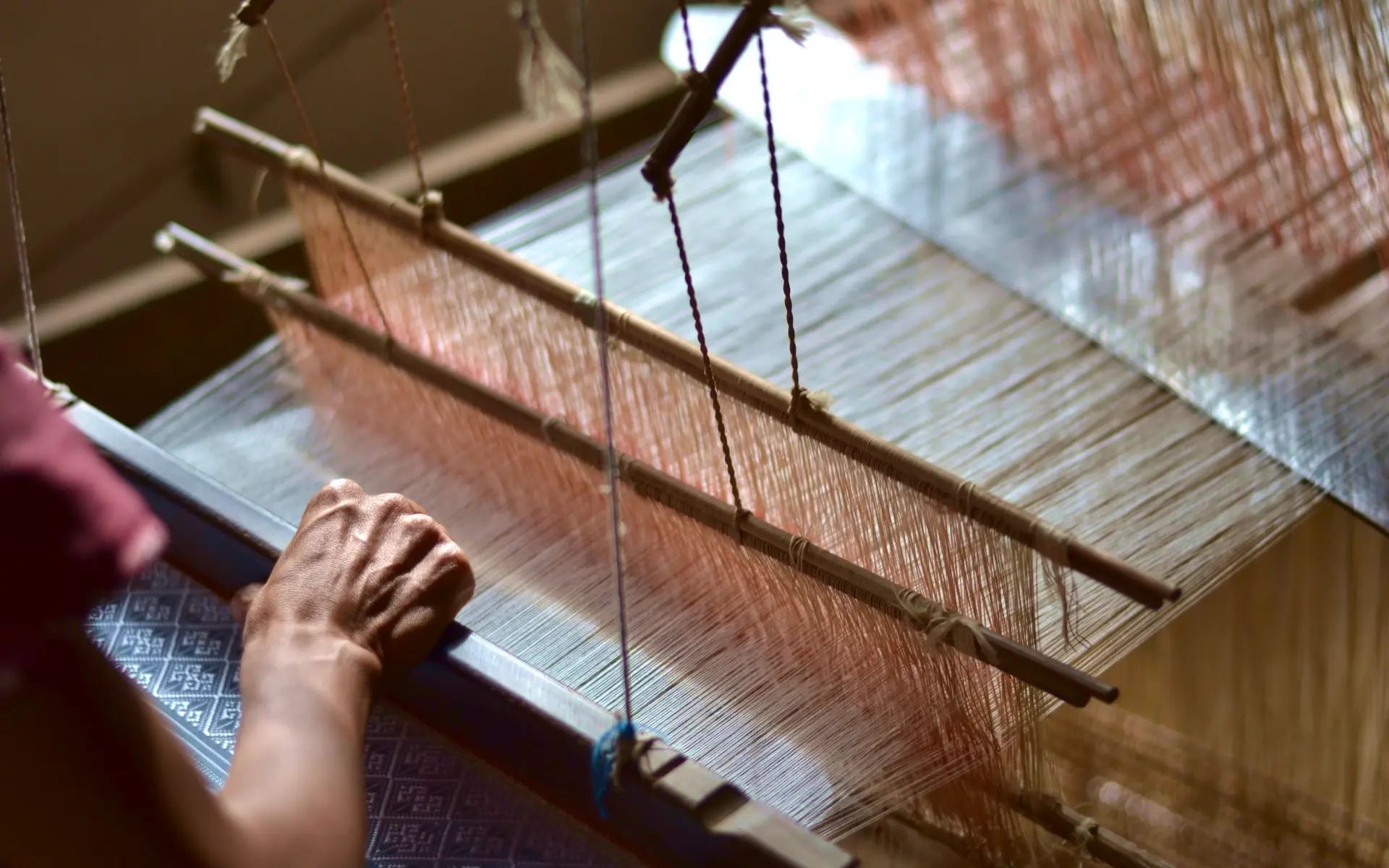
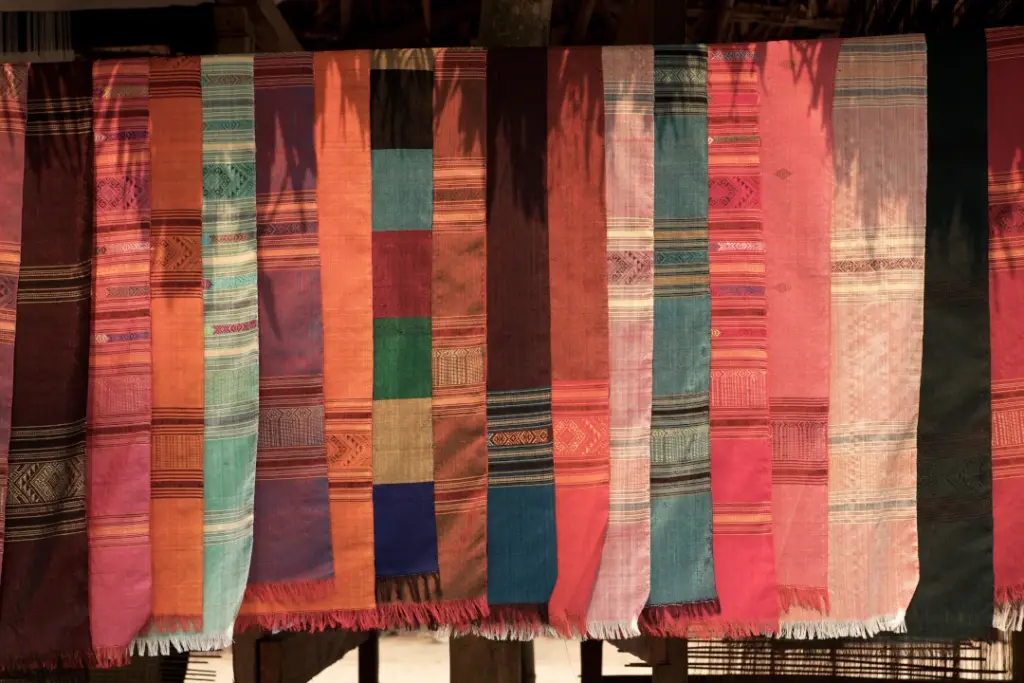
Weaving is the most widespread art form in the country. Silk and cotton are processed in all regions – often by women on wooden looms right at their homes. The patterns reflect ethnicities, regions, and symbolic meanings: dragons, waves, or mythical animals adorn the famous Pha Sin (wrap skirts) and ceremonial scarves.
Techniques such as Chok, Khit, Mat Mi, and Muk ensure immense diversity. In Vientiane, a modern style has developed due to migration from rural areas, combining traditional and international elements.
Gold- and Silversmithing
Even during the time of the Lan Xang Kingdom, the craft of working with precious metals flourished. Jewelry was not only adornment but also a form of portable wealth. Luang Prabang was once renowned for its delicate silver craftsmanship. Today, with government and private support, efforts are underway to revive this art form through training, quality standards, and design innovations.
Ceramics
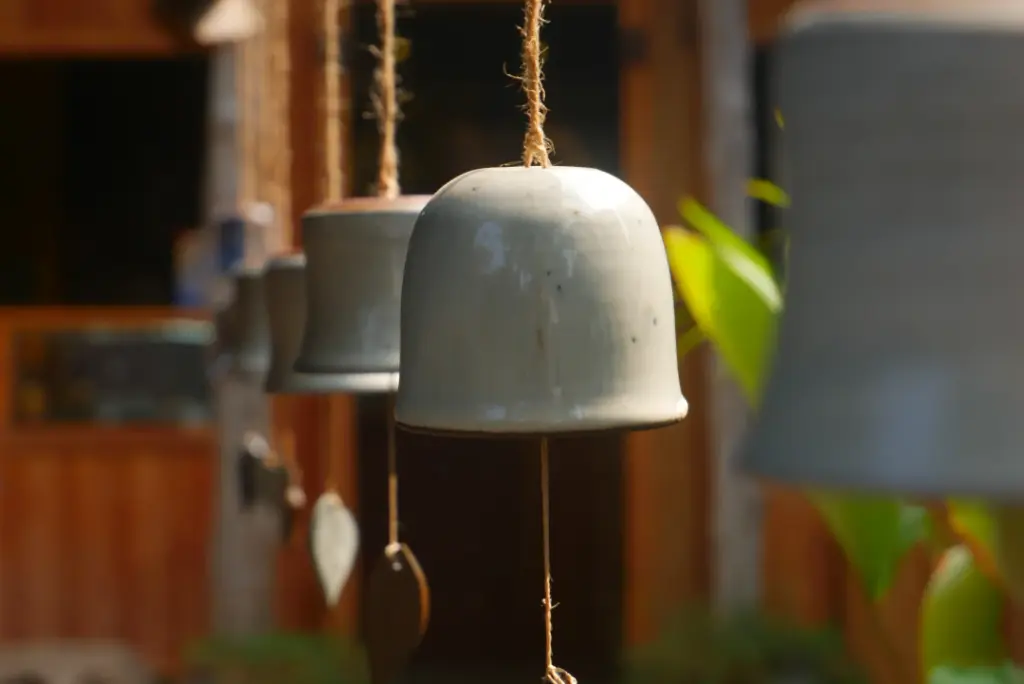
Finds from Ban Pako and Sisatthanak prove that high-quality ceramics – such as celadon – were produced in Laos centuries ago. In places like Ban Chan near Luang Prabang, this tradition continues today, supplemented by industrial production in cities like Vientiane and Savannakhet.
Woodcarving
The once dense forests provided the material for a flourishing woodcarving tradition. From thrones to temple doors, masterpieces of woodcarving were created during the Lan Xang period. Today, environmental protection and UNESCO initiatives are at the forefront of efforts to preserve and revive the knowledge of religious woodcarving.
Sa Paper
For centuries, Laotians have made paper from the bark of the mulberry tree. Today, the art of sa papermaking is experiencing a revival – especially in Luang Prabang, where it is used to create lampshades, cards, and bookmarks. In Vang Vieng, an innovative combination of weaving and paper art has been developed, which has been awarded the UNESCO AHPADA Prize.
Other Crafts
Bamboo and rattan weaving – from baskets to furniture – is a staple in many households and is now a thriving industry. Embroidery, particularly among the Hmong, Yao, and other hill tribes, creates colorful traditional costumes with global recognition. Lacquerware is experiencing a gentle revival, especially in collaboration with Myanmar in Luang Prabang.
Handicrafts Today – Tradition as the Future
Around 26,000 registered businesses currently operate in the Laotian handicraft sector. Textiles make up the largest share. With support from government ministries, international projects, and private initiatives, handicrafts are actively promoted – as a cultural asset that fosters national identity and as a sustainable source of income. Those who purchase local handicrafts while traveling not only support family businesses but also help keep a centuries-old tradition alive.